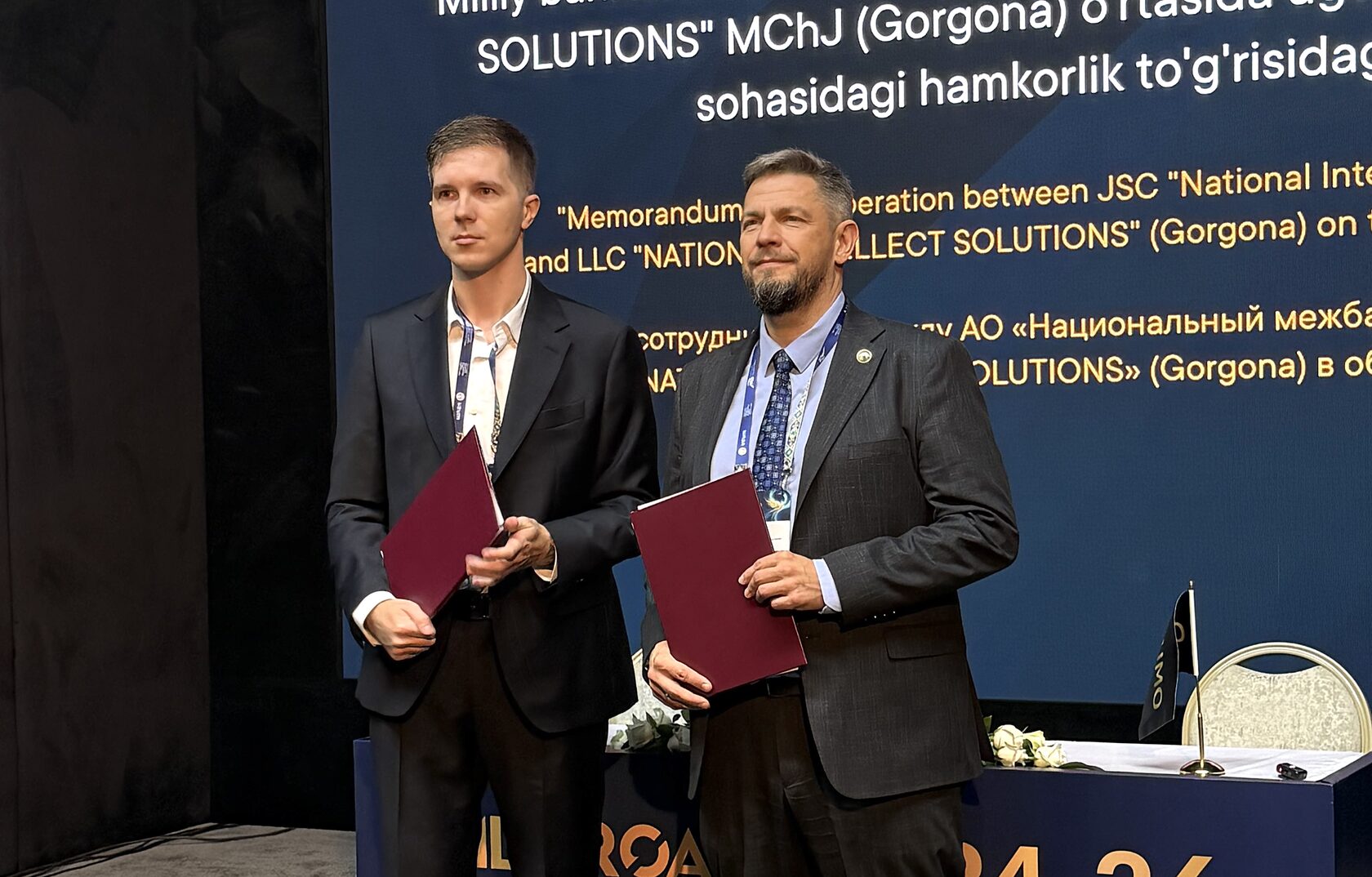
Gorgona AI and Humo, Uzbekistan's national payment system, have signed a memorandum on the joint development of agentic payments. The document was signed on August 24 at the Silk Road Finance & Technology Forum in Tashkent.
Agentic payments are transactions initiated not by a human but by a software agent, acting on an authorization the user granted in advance.
This is not a recurring payment. A recurring payment executes a predefined instruction on a schedule. An agent decides on its own which transaction to create and when — but only within the limits of the authority it has been granted. That introduces a new layer of questions: how to confirm that a transaction was initiated by this specific agent and that it held the right to do so; how to cap the amount and the validity period; how to revoke the authority in a single action; and what record remains in the log when an audit comes.
Approaches to such transactions are still taking shape worldwide: technology companies and international payment systems are each proposing their own protocols, and no single standard exists yet.
What the parties agreed on
The memorandum is a framework document. The parties are starting with a working group and the alignment of requirements; prototyping is carried out in an isolated environment on synthetic data. The memorandum does not provide for the exchange of real payment or personal data; specific projects will be formalized through separate agreements.
Agentic payments are transactions initiated not by a human but by a software agent, acting on an authorization the user granted in advance.
This is not a recurring payment. A recurring payment executes a predefined instruction on a schedule. An agent decides on its own which transaction to create and when — but only within the limits of the authority it has been granted. That introduces a new layer of questions: how to confirm that a transaction was initiated by this specific agent and that it held the right to do so; how to cap the amount and the validity period; how to revoke the authority in a single action; and what record remains in the log when an audit comes.
Approaches to such transactions are still taking shape worldwide: technology companies and international payment systems are each proposing their own protocols, and no single standard exists yet.
What the parties agreed on
- Payment mandate — an authorization model with a per-transaction cap, a limit per period, a validity period, and the ability to revoke it at any moment
- Agent identification — how it is confirmed that a transaction was initiated by this specific agent and that the agent held the right to do so
- Control layer — verification of every transaction against the mandate, restriction of the agent's authority, and logging of all its actions
- International context — reviewing the emerging approaches to agentic payments and assessing their applicability to Uzbekistan's national payment infrastructure
The memorandum is a framework document. The parties are starting with a working group and the alignment of requirements; prototyping is carried out in an isolated environment on synthetic data. The memorandum does not provide for the exchange of real payment or personal data; specific projects will be formalized through separate agreements.